Please note: Our practice does not offer revision rhinoplasty. The information about revision procedures in this article is provided for educational purposes.
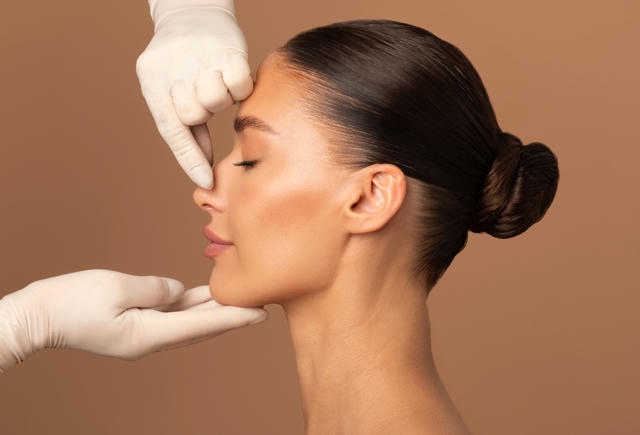
A rhinoplasty – commonly called a nose job – is one of the most popular and nuanced procedures in facial plastic surgery. It involves reshaping the nose for aesthetic or functional purposes, addressing various issues, such as a prominent dorsal hump, a bulbous tip, a deviated septum, or simply poor facial proportion.
There are two distinct categories of this surgery:
Primary (your first time)
Revision (a corrective surgery performed after a previous rhinoplasty)
While the goal is similar – a nose that looks and functions better – the procedures differ significantly in execution, complexity, and cost.
For most patients, the initial rhinoplasty is a relatively straightforward surgical experience, though “straightforward” in this context is relative. Rhinoplasty is still considered one of the most technically demanding procedures in all of cosmetic surgery.
During the initial procedure, a surgeon works with untouched nasal tissue. The cartilage is pliable, the anatomy is largely predictable, and there’s no prior scar tissue to navigate. This makes surgical planning more precise and outcomes more predictable. Typical steps include:
Reshaping or reducing the nasal bridge
Refining the nasal tip
Correcting asymmetry
Addressing breathing issues like a deviated septum (septoplasty)
Primary rhinoplasty generally takes between one and three hours, depending on the complexity of the changes being made. It’s performed under general anesthesia or IV sedation on an outpatient basis.
Cost: In the United States, the average cost of a primary rhinoplasty ranges from $5,000 to $12,000, including surgeon’s fees, anesthesia, and facility costs. Insurance typically doesn’t cover cosmetic rhinoplasty, though functional corrections may qualify for partial coverage.
If there’s one thing every patient should understand before pursuing a second surgery, it’s this: revision rhinoplasty is significantly more complex than primary rhinoplasty, and that complexity drives up nearly every variable – time, cost, and risk.
When a surgeon operates on a nose that has already been altered, they encounter scar tissue that makes the anatomy harder to work with, cartilage that may have been removed or repositioned, and structural changes that affect how the nose heals. In some cases, the surgeon must harvest cartilage from elsewhere in the body – commonly the ear or rib – to rebuild areas that were over-reduced during the first surgery.
Scar tissue: Previous incisions create adhesions that complicate dissection and limit visibility.
Reduced cartilage supply: If cartilage was removed during the first surgery, there may not be enough nasal cartilage left to reshape.
Unpredictable healing: Scar tissue changes how the skin drapes and responds post-operatively, making results harder to predict.
Psychological complexity: Patients seeking revision often carry anxiety or disappointment from their prior experience, which requires more thorough communication and expectation-setting.
Cost: Because of its complexity, revision rhinoplasty typically costs between $8,000 and $20,000 or more. Surgeons who specialize in revision cases often command higher fees, and the procedure can take twice as long as a primary surgery.
Recovery after rhinoplasty follows a similar general timeline, whether it’s a primary or revision surgery, but the experience can differ in important ways.
After a primary rhinoplasty, most patients return to work within 1 to 2 weeks, with the majority of visible swelling resolving within a few months. Final results typically stabilize within 12 months.
Revision rhinoplasty recovery is often longer and more unpredictable. Because scar tissue doesn’t heal the same way virgin tissue does, swelling can persist for 18 months or even two years. Patients need to be prepared for a longer emotional journey, too – watching a swollen nose slowly reveal its final shape requires patience that not everyone anticipates needing.
Key recovery tips that apply to both procedures:
Avoid strenuous activity for at least 4–6 weeks
Sleep with your head elevated to minimize swelling
Protect your nose from sun exposure
Attend all follow-up appointments without exception
Perhaps the single most important decision you’ll make throughout this process is choosing the right surgeon. For nose surgery of any kind, you want someone who is not only experienced but appropriately credentialed.
A board-certified surgeon has completed extensive training in surgical procedures and passed rigorous examinations through recognized medical boards. Dr. Zarrabi is a board-certified Maxillofacial Surgeon with specialized expertise in nasal and facial anatomy. For revision cases specifically, look for a surgeon who can demonstrate a portfolio of revision work and who is transparent about realistic outcomes.
Questions worth asking during your consultation:
How many revision rhinoplasties have you performed?
Will I need cartilage grafts, and where will they come from?
What does my specific anatomy make possible — and what does it limit?
Can I speak with previous patients who had similar corrections?
Be cautious of any surgeon who promises perfection or minimizes the complexity of what you’re asking for. Revision rhinoplasty demands honesty on both sides of the table.
Whether you’re considering your first rhinoplasty or a revision, tempered expectations are your greatest asset. Rhinoplasty is not about creating a perfect nose. It’s about achieving a nose that’s better-balanced, functional, and aligned with your natural features.
Primary rhinoplasty patients often make the mistake of fixating on a specific look they’ve seen on someone else. Revision patients sometimes enter surgery hoping to “undo” everything and start fresh, which is rarely possible given the structural changes already made.
The best outcomes come from patients who communicate clearly, trust their surgeon’s guidance, and understand that healing is a process measured in months, not days. Whatever stage of this journey you’re on, knowledge and patience are the most powerful tools you have.
Revision rhinoplasty differs from a first-time surgery in ways that extend well beyond what happens in the operating room. Unlike primary rhinoplasty, which begins with untouched tissue and a relatively predictable nasal structure, a secondary procedure is defined by what was and wasn’t accomplished during the initial surgery. Many patients pursue revision surgery specifically to correct unsatisfactory results that aren’t always caused by error, but by the natural unpredictability of tissue healing over time. Cosmetic issues that seemed invisible right after surgery can surface months later, quietly eroding a patient’s satisfaction with their aesthetic appearance. This is why managing patient expectations from the very first consultation matters so much, particularly when the previous surgeon made structural changes that the patient came to regret only after the nose settled into its final form. Addressing both aesthetic concerns and any functional limitations from the previous surgery requires a surgeon who listens carefully and plans thoroughly.
The technical demands of working around altered anatomy are considerable, and revision rhinoplasty requires a level of surgical precision that goes well beyond what most primary cases demand. When the nasal anatomy has been significantly modified, the nasal framework may lack the structural support needed to maintain its shape – a problem that becomes especially pronounced when too much cartilage was removed during earlier surgery. Experienced surgeons address this by incorporating grafts to reinforce weakened areas and restore both form and stability.
Functional considerations deserve equal attention alongside cosmetic ones. Patients with persistent breathing problems often discover that issues involving the nasal septum, or an underlying nasal obstruction, were never fully resolved. In some cases, procedures like turbinate reduction are built into the revision plan to improve nasal function and restore healthy nasal airflow that had been compromised for years.
For revision rhinoplasty patients, understanding the healing process is just as important as understanding the surgery itself. Those who undergo revision rhinoplasty should be prepared for prolonged swelling that lingers well beyond what they may have experienced after their first operation – residual swelling can remain for 18 months to two full years, meaning healing and final results require patience on a timeline that surprises many people. Revision procedures are not quick corrections, and anyone motivated to address aesthetic concerns or resolve a longstanding nasal issue must approach recovery with realistic expectations.
Ultimately, the most important decision any patient makes in this process – whether pursuing revision or a first-time rhinoplasty – is selecting a qualified surgeon who pairs technical mastery with transparent, honest communication. The right surgeon doesn’t simply reshape a nose; they help you understand exactly what’s achievable, what the road to recovery truly looks like, and how to arrive at results you can feel confident in for years to come.
Please note: Dr. Zarrabi is a board-certified Maxillofacial Surgeon, not a plastic surgeon, and offers in-person consultations only. Information here about board certification is general and for educational purposes.