
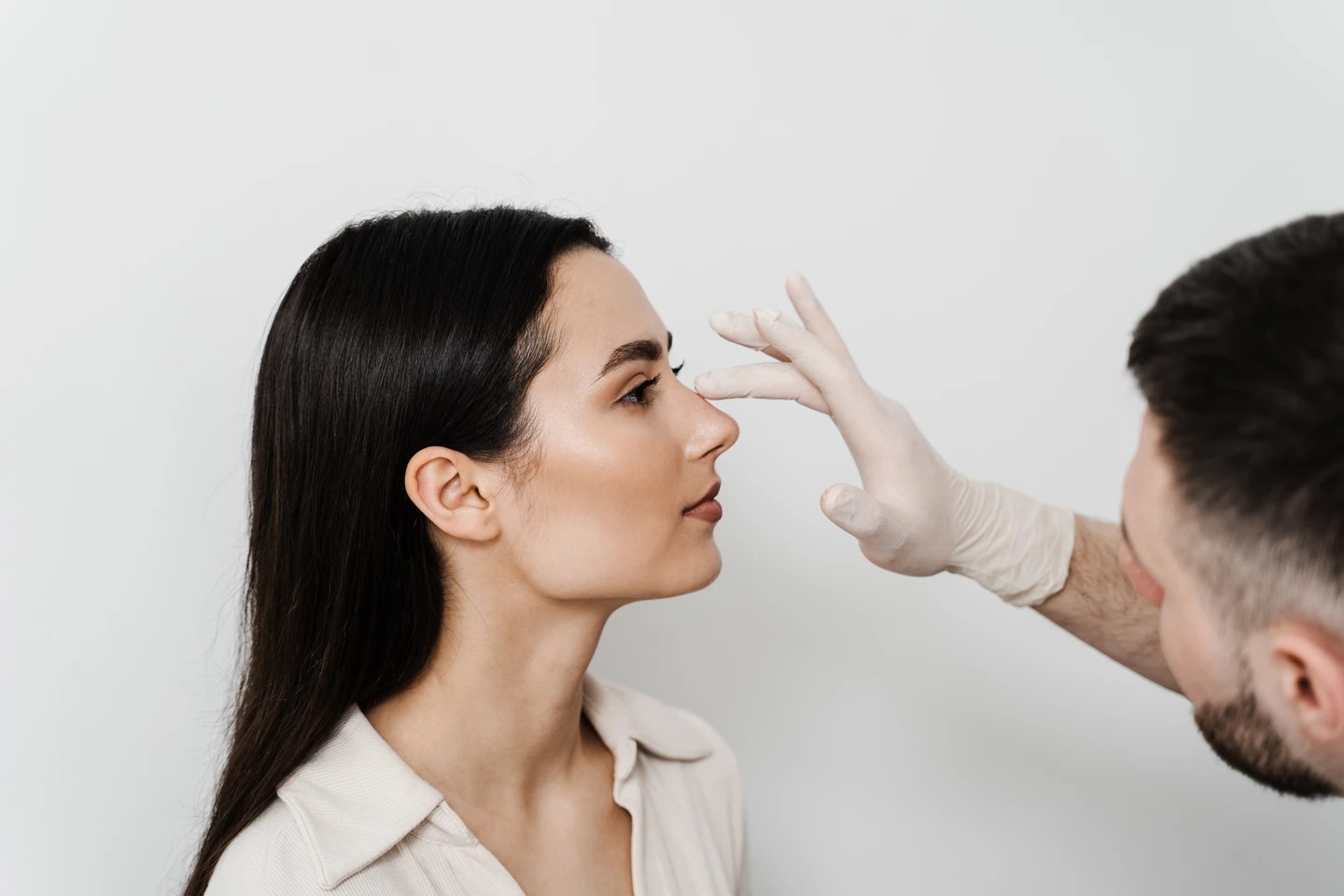
Before diving into the specifics of swelling, it helps to understand why the nose swells so significantly in the first place. During a rhinoplasty, the surgeon works with delicate nasal tissues, cartilage, and sometimes bone to reshape the nose. This level of tissue manipulation, whether through an open or closed approach, naturally triggers the body’s inflammatory response. Fluids rush to the area to begin healing, leading to swelling. The more extensive the surgical changes, the more pronounced the initial swelling tends to be.
Swelling doesn’t just appear and disappear uniformly. It moves through distinct phases that every patient can expect to experience, though the intensity varies from person to person.
The acute swelling stage lasts roughly 1-2 weeks after surgery. This is when swelling is at its most dramatic. During this window, bruising around the eyes is common, the nose will appear significantly larger than its intended size, and breathing through the nose may feel restricted due to internal swelling. Most patients find this stage the hardest emotionally – the face looks far from the result they envisioned, which is completely normal. By the end of week two, you’ll likely have shed your splint, and much of the bruising will have faded, giving you your first glimpse of the general shape of your new nose.
Of all the areas of the nose, tip swelling is the most persistent and the last to fully resolve. The tip contains dense soft tissue with limited lymphatic drainage, which means fluid takes significantly longer to clear from this area compared to the bridge or sides of the nose. At the six-month mark, patients often notice the tip still looks slightly bulbous or undefined. Full tip refinement can take 12 to 18 months. In some cases, the recovery period may take up to 2 years for patients with thicker skin. This is one of the most important things to understand before surgery, as premature dissatisfaction with the tip is one of the leading reasons patients consider additional procedures.
Here’s a general breakdown of what most patients experience as swelling resolves:
Understanding what’s expected versus what warrants a call to your surgeon can save a lot of anxiety. Normal experiences include increased swelling after physical activity, mild asymmetry during healing, numbness or a feeling of stiffness in the nose, and skin sensitivity or temporary changes in skin texture. You should contact your surgeon if you notice: severe pain, signs of infection (such as increased redness, warmth, or discharge), difficulty breathing that worsens rather than improves, or any significant asymmetry that develops rapidly.
While you can’t rush the biological process of healing, there are proven steps to reduce swelling after rhinoplasty and support your recovery:
No tip on this list matters more than following your surgeon’s aftercare instructions to the letter. Your surgeon knows the specifics of your procedure – the techniques used, the tissues affected, and any factors that might affect your healing. Their aftercare instructions are tailored to your individual case, not a generic template. This includes when to start taping your nose (a technique many surgeons recommend to compress swelling in the tip), which medications or supplements to avoid, when you can safely return to exercise, and when follow-up appointments should occur.
Patients who are considering revision surgery because they’re unhappy with their results are frequently advised to wait at least 12 months (and often longer) before making any decisions. The reason is straightforward: swelling, especially in the tip, can make the nose look uneven, wide, or over-projected even when the surgical outcome is technically excellent. Many patients who sought revision surgery before the one-year mark later found that their concerns resolved on their own as the swelling cleared. Patience is not just advised – it’s genuinely one of the most important parts of the process.
For most patients, the final results of nose surgery become fully visible between 12 and 18 months after surgery. At this point, all residual swelling has resolved, the tissues have settled into their permanent position, and the nose reflects the true outcome of the procedure. Photos taken at the one-year mark are typically what surgeons use to document results, as anything earlier doesn’t capture the complete picture. If you’re still in the thick of recovery, the best advice is simple: trust the process, follow your surgeon’s guidance, and give your body the time it needs to heal fully.
During the immediate post-operative phase, rhinoplasty patients are managing a lot at once – nasal dressings, a nasal splint, nasal congestion from swollen nasal passages, and the emotional weight of seeing significant swelling where they hoped to find a refined result. This early recovery phase can feel overwhelming, but it is a predictable and necessary part of the healing process. Every instruction your surgeon gives you, from how long to wear the nasal splint to how to care for nasal dressings, is designed to prevent complications and create the conditions for optimal recovery. Understanding the rhinoplasty recovery time upfront means you’re far less likely to spiral into worry when noticeable swelling is still present weeks after your procedure, because you’ll know it’s exactly what’s supposed to happen.
Whether you’ve undergone primary rhinoplasty or are navigating the more complex path of revision rhinoplasty surgery, the core principles are the same: follow your surgeon’s guidance, be patient with your body, and resist judging this cosmetic procedure by its earliest results. There are real steps you can take to manage swelling and minimize swelling along the way, from adjusting your diet to carefully taping the nasal tip as directed, but none of them replace time. Prolonged swelling, especially around the nasal tip, is biology at work, not a red flag. If something feels off during your nose job recovery, bring it to your surgeon rather than turning to assumptions or comparisons.
The rhinoplasty recovery timeline is easier to navigate when expectations are set clearly from the start. Therefore, an honest and detailed rhinoplasty consultation is crucial before you step into the operating room.
