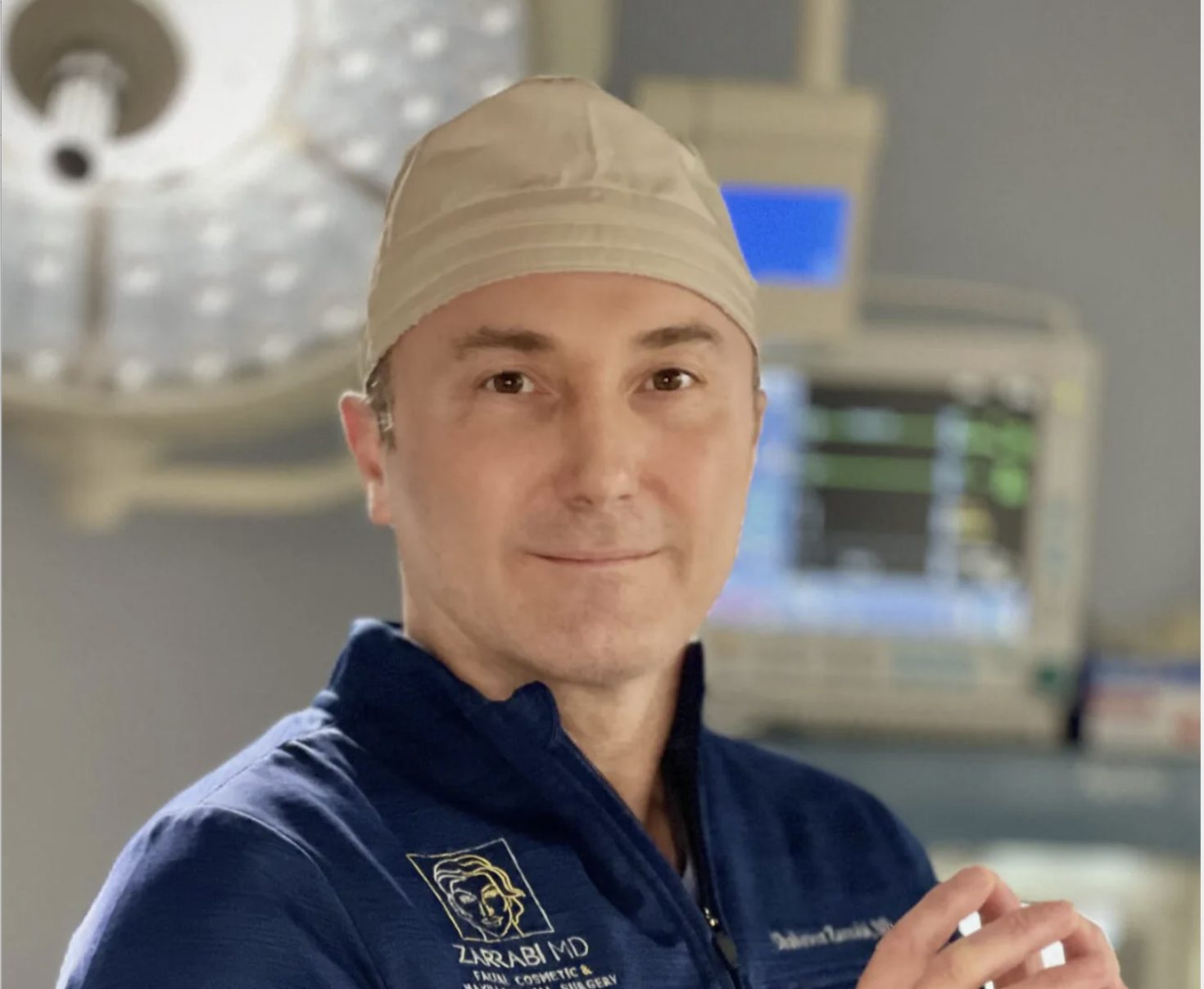
Because the nose is not a separate part. It sits on the facial skeleton: the nasal bones join the upper jaw, the septum divides the airway, and how the nose looks depends on the cheeks, lips and chin around it. A maxillofacial surgeon is trained to operate on exactly that framework of bone, cartilage and airway. At Zarrabi MD in Newport Beach, Dr. Shahrouz Zarrabi, a board-certified oral and maxillofacial surgeon, uses that training to shape noses that fit the whole face and still breathe well.
Yes. Oral and maxillofacial surgery is the surgical specialty of the face, jaws and the bones of the midface. Its training covers nasal fractures, the septum, facial reconstruction and facial cosmetic surgery, so the nose is part of the specialty’s core anatomy, not an add-on. Dr. Zarrabi went further: he co-authored the rhinoplasty chapter of the Atlas of Operative Oral and Maxillofacial Surgery (Wiley-Blackwell, 2015), a reference used to train other surgeons and residents, and nose surgery is the focus of his practice.
A nose that looks right on its own can look wrong in profile if the chin or upper jaw is out of balance. A maxillofacial surgeon reads the face as one structure. Dr. Zarrabi looks at how your nose relates to your chin, jaw and cheeks before deciding how much to change it, so the result looks like it always belonged to you.
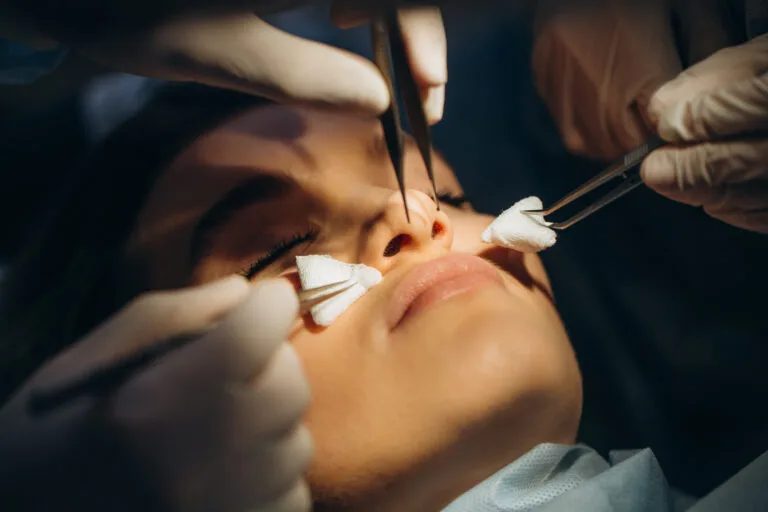
Smoothing a dorsal hump, narrowing a wide nose or straightening a crooked one means reshaping the nasal bones. Bone surgery is everyday work for a maxillofacial surgeon. Dr. Zarrabi uses ultrasonic (piezo) instruments that sculpt bone in fine steps while protecting the soft tissue around it, and offers a closed piezo preservation approach that keeps more of the nose’s natural structure.
Many patients who want a new shape also have a deviated septum or a narrow airway. A surgeon who knows the airway inside the facial skeleton can correct both in the same operation. That is the idea behind functional rhinoplasty and septorhinoplasty: a nose that looks better should also work better.
Maxillofacial surgeons are used to planning from scans, because jaw and facial bone surgery depends on millimetres. Dr. Zarrabi uses in-office 3D imaging and CT scans to study your bone, cartilage and airway before surgery, so the plan is built on your anatomy rather than a template.

Reconstruction is part of maxillofacial training. Dr. Zarrabi helped plan and perform landmark reconstructive cases and published a new technique for rebuilding an entire nose (“A Novel Approach in Total Nasal Reconstruction,” Journal of Oral and Maxillofacial Surgery, 2019). That depth matters for a broken nose, a crooked nose or thick nasal skin, where the underlying structure has to be rebuilt, not just trimmed.
All three specialties can perform rhinoplasty well. The difference is where their training starts:
Plastic surgeons train in cosmetic and reconstructive surgery across the whole body.
ENT (ear, nose and throat) surgeons train in the airway, sinuses and the head and neck.
Oral and maxillofacial surgeons train in the bones and soft tissue of the face and jaws, often with both a dental and a medical degree.
For rhinoplasty, the specialty name matters less than the surgeon’s nose-specific training, how many rhinoplasties they perform and whether they plan for both shape and breathing. A maxillofacial surgeon who focuses on rhinoplasty brings the facial-skeleton view on top of that.
D.D.S., NYU College of Dentistry, graduating at the top of his class
M.D. and general surgery training, LSU Health Sciences Center, New Orleans
Oral and maxillofacial surgery residency, LSU Health Sciences Center
Board certified, Diplomate of the American Board of Oral and Maxillofacial Surgery
Clinical Instructor of Surgery at UCLA and staff surgeon at Hoag Hospitals in Newport Beach and Irvine
He is also a sculptor, which shapes how he sees proportion. In his words: “The proficient surgeon is one who remains focused not merely on the technique but on achieving optimal results.” Read more about Dr. Zarrabi.
The full-face approach helps most when:
Your profile feels out of balance, not only your nose.
You want a better shape and easier breathing at the same time.
Your nose was broken, is crooked or has been operated on before.
You want to keep the features of your heritage; Dr. Zarrabi performs ethnic rhinoplasty for patients of many backgrounds.
At your consultation, Dr. Zarrabi examines your nose inside and out, reviews your 3D images with you and explains which technique he recommends and why.
Choose a maxillofacial surgeon for rhinoplasty when you want a nose shaped as part of your face, with the bone, the airway and your profile planned together. Dr. Zarrabi pairs that training with a practice focused on rhinoplasty. To see what that could mean for your nose, request a consultation at our Newport Beach office or call 949-873-0807.