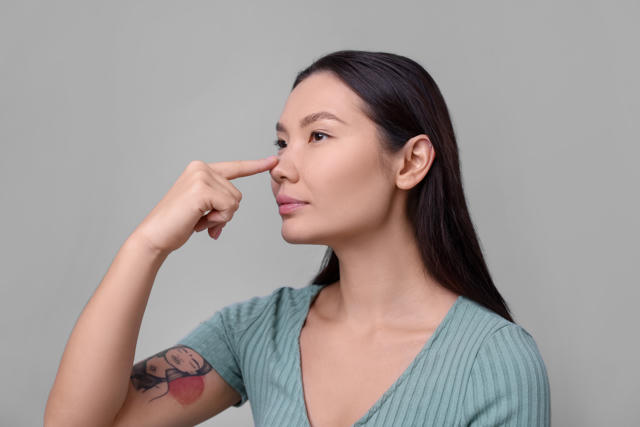
A drooping nose tip can be corrected with surgical procedures, such as Tip Plasty or rhinoplasty, which reposition and support the underlying cartilage. Temporary or less-invasive options, such as strategic injections, can offer a subtle lift. The most suitable approach depends on your anatomy, the cause of the droop, and your aesthetic goals, all of which are evaluated during an in-person consultation.
A drooping nose tip, clinically known as tip ptosis, is a common aesthetic concern in which the tip of the nose points downward instead of straight ahead or slightly upward. This can make the nose appear longer, older, or disproportionate to the rest of the face.
Aesthetically, the ideal angle between the upper lip and the columella (the strip of skin between the nostrils) is typically 95-105 degrees for women and 90-95 degrees for men. When a tip is ptotic, this nasolabial angle is significantly smaller, creating a “hooked” or downturned appearance. This can be a feature you’ve had your whole life or something that develops and worsens over time.
The visual impact of a drooping tip includes:
The nose appearing longer than it actually is.
A profile that looks aged or harsh.
The tip of the nose obscuring part of the upper lip.
A shadow casting over the upper lip area.
For some individuals, the tip droop is most noticeable when they smile. This is known as a dynamic droop. It occurs because a specific muscle, the depressor septi nasi, pulls the nasal tip downward during facial animation. When you smile, this muscle contracts, tugging on the base of the nose and causing the tip to plunge. While many people experience a slight downward movement when smiling, a hyperactive depressor septi nasi muscle can cause a dramatic and often undesirable effect.
The structure and position of the nasal tip are determined by the size, shape, and strength of the lower lateral cartilages, as well as their connection to the nasal septum. A droop can result from several anatomical factors.
The primary reasons for a congenitally drooping tip are structural. These are characteristics you are born with and are part of your unique nasal anatomy.
Overly Long Septal Cartilage: The septum is the wall of bone and cartilage that divides your nose into two separate nostrils. If the lower part of the septum is excessively long, it can push the tip cartilages downward and forward, causing them to droop.
Weak Tip Cartilages: The lower lateral cartilages are two C-shaped structures that form the framework of your nasal tip. If these cartilages are weak, thin, or lack inherent stiffness, they may not have enough structural integrity to support the tip, allowing it to sag under the weight of the overlying skin.
Poor Tip Support Mechanisms: The nasal tip is held in place by a complex network of ligaments and attachments to the septum. If these supportive connections are weak or disconnected, the tip lacks the necessary foundation and will naturally droop downward.
Previous Nasal Trauma: An injury that damages the septal cartilage or the tip cartilages can disrupt the nose’s supportive framework, leading to a droop that wasn’t present before the accident.
It’s common for the nose to change shape with age. A tip that was well-supported in youth may begin to droop over the years due to natural physiological processes.
Weakening of Ligaments: The fibrous ligaments that suspend the tip cartilages can stretch and weaken over time, much like other connective tissues in the body. As this support system loosens, gravity’s effects become more pronounced, and the tip gradually descends.
Loss of Cartilage Strength: Cartilage itself can become less resilient with age. This loss of structural integrity means the tip’s framework is less able to resist the downward pull of gravity and the skin envelope.
Gravity: Over a lifetime, the constant pull of gravity takes a toll on all facial structures, including the nose. When combined with weakened ligaments and cartilage, gravity inevitably causes some degree of tip ptosis.
Addressing a drooping tip can range from temporary, non-invasive cosmetic tricks to permanent surgical solutions. The right choice is highly personal and depends on the underlying cause and the degree of correction desired.
Non-surgical options offer a temporary fix with minimal downtime. They are suited for very mild drooping or for individuals who are not ready for surgery.
Liquid Nose Job (Botox)
For a dynamic droop that occurs when smiling, a few units of a neuromodulator like Botox can provide a subtle lift. The injection targets the depressor septi nasi muscle, relaxing its downward pull. This allows the muscles that elevate the tip to work unopposed, resulting in a slight upward rotation of the tip, especially during animation. The effect is temporary, typically lasting 3-4 months, and is only effective for muscle-induced drooping.
Nose Thread Lift
A thread lift involves placing dissolvable sutures under the skin to mechanically lift the nasal tip. While this can produce an immediate lift, the results are often unpredictable and short-lived, as the threads dissolve over several months. This is not a procedure offered at our practice, as surgical correction provides a more reliable, stable, and permanent outcome.
For a permanent and significant correction, surgery is the definitive answer. Surgical techniques address the underlying structural issues that cause the droop, providing a stable result. At our practice, Dr. Zarrabi focuses exclusively on primary rhinoplasty, meaning he operates on patients who have not had a previous nose surgery.
Tip Rhinoplasty (Tip Plasty)
When the drooping tip is the primary or only concern, a Tip Plasty may be sufficient. This procedure focuses exclusively on reshaping the cartilages of the nasal tip without altering the nasal bones. Dr. Zarrabi can trim, reshape, and reposition the lower lateral cartilages, often using sutures to rotate the tip upward into a more desirable position. A cartilage graft, often taken from the septum, may be used as a “strut” to provide strong, lasting support for the newly positioned tip.
Correcting a drooping tip can be done using either an open or closed approach, and the choice depends on the case’s complexity.
Closed Rhinoplasty: All incisions are made inside the nostrils. This avoids an external scar but provides the surgeon with more limited visibility. It is often suitable for less complex tip modifications.
Open Rhinoplasty: This approach involves a small incision across the columella. This allows the surgeon to lift the skin off the nasal framework, providing direct, unobstructed visualization of the tip cartilages and septum. This enhanced visibility is often essential for the precise cartilage grafting and suturing techniques required to correct significant drooping and ensure a symmetrical, stable result.
Ultrasonic Rhinoplasty
For patients whose nasal structure requires adjustments to both the bone and the tip, Dr. Zarrabi utilizes Piezo Rhinoplasty. This advanced technique uses a specialized device that emits high-speed sound waves to precisely sculpt and reshape nasal bones. Unlike traditional tools such as hammers and chisels, this technology enables less invasive bone shaping with greater precision, which can reduce swelling and bruising. While primarily for bone work, it is part of a comprehensive approach that can be combined with tip refinement to create overall nasal harmony.
Septorhinoplasty and Functional Corrections
In many cases, a drooping tip is linked to a deviated septum that is overly long. A Septorhinoplasty is a combined procedure that addresses both function and aesthetics. During the surgery, Dr. Zarrabi can straighten the deviated septum to improve breathing while simultaneously trimming the lower edge of the septum. This shortens the “tent pole” that is pushing the tip down, allowing it to be rotated upward into a more natural position. This is a common and highly effective method for correcting a ptotic tip.
Deciding on the right path forward involves a careful evaluation of your anatomy, goals, and lifestyle. The most important step in this journey is a thorough in-person consultation with a surgeon specializing in rhinoplasty.
Severity of the Droop: A very mild, dynamic droop might be managed with Botox. A significant, constant droop caused by weak or long cartilage will require surgical intervention.
Permanence of Results: Are you looking for a temporary change or a permanent solution? Non-surgical options require ongoing maintenance, while surgery offers a one-time, lasting correction.
Anatomical Cause: The underlying reason for the droop dictates the treatment. A muscle-related issue has a different solution than a cartilage-related one.
Overall Nasal Aesthetics: Do you have any other concerns, such as a dorsal hump or a wide bridge? If so, a full rhinoplasty would be more appropriate than a Tip Plasty alone to ensure the entire nose is balanced and harmonious.
There is no substitute for a direct, physical examination. At our office, all rhinoplasty consultations are conducted in person. During your consultation, Dr. Zarrabi will carefully examine the internal and external structures of your nose.
This evaluation is aided by our in-office 3D imaging technology. We can take images of your nose and simulate potential surgical outcomes, allowing you to see a realistic preview of what a lifted, rotated tip would look like on your face. This powerful tool facilitates a clear discussion about your goals and helps set realistic expectations. Because rhinoplasty is a surgical procedure, this in-person evaluation is essential for creating a safe and effective surgical plan tailored specifically to you.
Understanding the process from consultation to recovery can help you feel more prepared and confident in your decision.
Your journey begins with scheduling an in-person consultation, which is held on Wednesdays and Fridays. As Dr. Zarrabi exclusively performs primary rhinoplasty, our team will confirm that this will be your first nose surgery.
During the consultation, Dr. Zarrabi will discuss your concerns, perform a physical examination, and use 3D imaging to explore potential results. If you decide to proceed, our patient coordinator will help you schedule a surgery date. A pre-operative appointment will be scheduled closer to your surgery date to review all instructions and finalize the surgical plan.
After your surgery, a cast will be placed on your nose to protect it and help manage swelling. This cast is typically removed after about one week. Swelling and some bruising are normal and will gradually subside over the following weeks and months.
Attending all scheduled post-operative appointments is crucial. These visits allow Dr. Zarrabi to monitor your healing, remove sutures, and ensure everything is progressing as expected. While you will see a significant improvement once the cast is off, it’s important to remember that the final, refined result of your rhinoplasty will continue to emerge over 12 to 18 months as all residual swelling resolves.
A drooping nasal tip can be a source of self-consciousness, but it is highly correctable. While non-surgical options offer temporary fixes for minor cases, surgical correction with an experienced surgeon provides a permanent, structural solution. Procedures ranging from a focused Tip Plasty to a comprehensive Ultrasonic Rhinoplasty can effectively lift, rotate, and support the tip, resulting in a more balanced and refined facial profile. The first step toward achieving your desired result is an in-person consultation to determine the precise cause of the droop and develop a customized surgical plan.
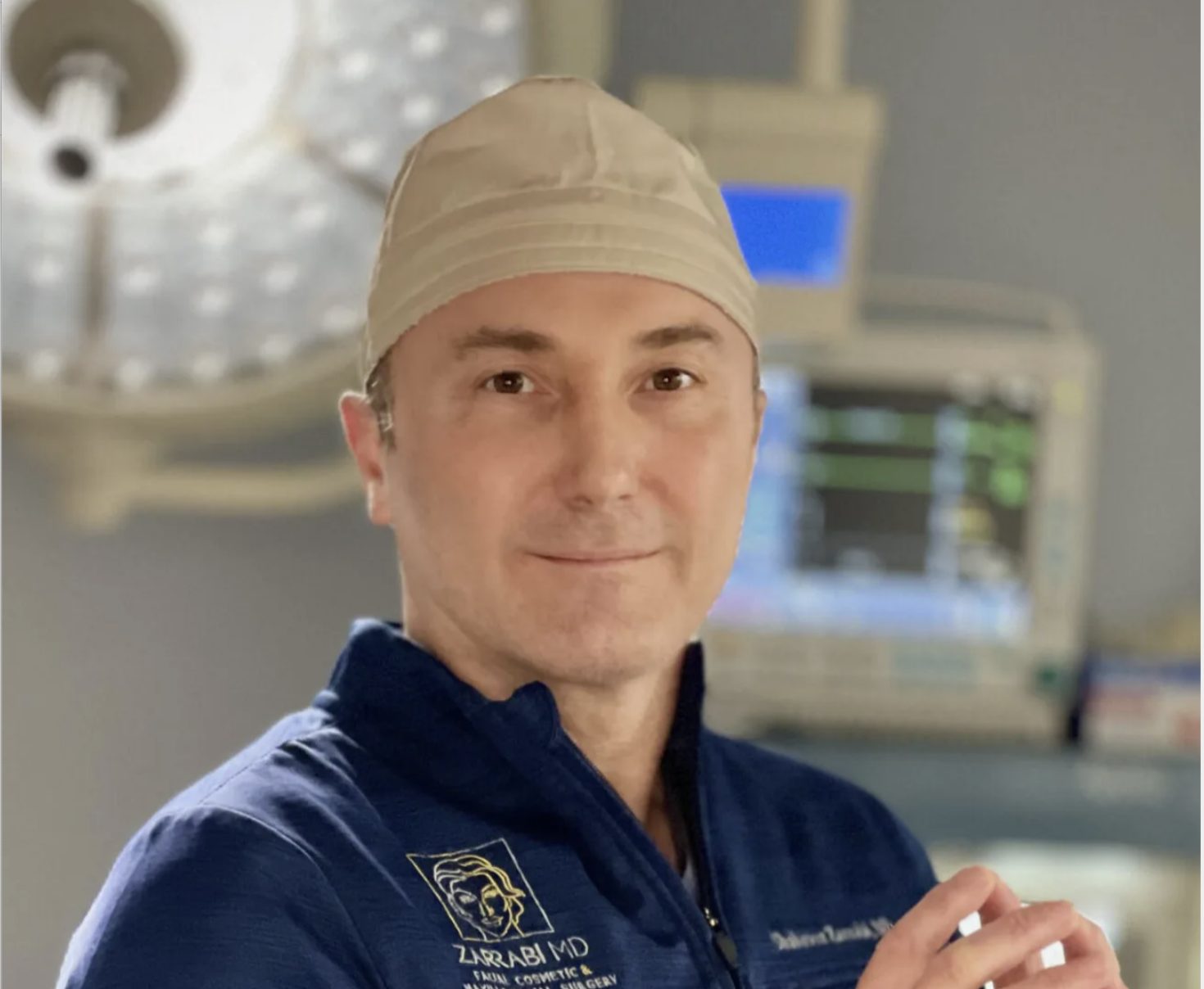
Dr. Zarrabi’s practice is a unique combination of art, science and cutting edge technology.
Dr. Zarrabi is a Board Certified Maxillofacial Surgeon and Diplomate of American Board of Oral and Maxillofacial Surgery. He is also an accomplished Sculptor Artist and he has created masterpieces for collections nationally and around the world.
Discover other insightful and engaging content from our blog