
Liquid rhinoplasty uses injectable filler to temporarily smooth or balance the nose without changing its size. Surgical rhinoplasty permanently reshapes bone and cartilage and can improve breathing. If you want a smaller nose, a refined tip, a removed hump, or better airflow, surgery is the option that delivers that change. If you want a subtle, short-term adjustment and accept that it will fade, filler may be enough.
This article compared side by side, so you can see what each option can and cannot do. Our focus at Zarrabi MD is rhinoplasty surgery, including Piezo ultrasonic techniques, and we see many patients who have tried filler first or are weighing both paths.
Liquid rhinoplasty is also called a nonsurgical nose job. It uses a dermal filler, often a hyaluronic acid gel, placed under the skin of the nose. The filler adds volume in targeted spots.
Adding volume can create the look of a straighter or smoother profile. For example, filler placed above and below a small bump can make the bridge appear more even. Filler can also lift the look of a slightly drooping tip in some cases.
The key word is “adds.” Filler cannot remove anything. It cannot shrink a wide nose, narrow nostrils, reduce a large hump, or reshape a bulbous tip. Every change comes from building up around the existing structure.
Liquid rhinoplasty is also temporary. The body slowly breaks down the filler over time, so the result fades and the nose returns to its original shape unless more filler is added.
Surgical rhinoplasty reshapes the nose at its foundation: the bone, cartilage, and soft tissue. It can reduce, refine, straighten, or support the nose. It can also correct internal problems that affect breathing.
Dr. Zarrabi, a Cosmetic Surgeon, focuses on primary rhinoplasty, meaning a patient’s first nose surgery. Our office uses several approaches:
Ultrasonic rhinoplasty, also called Piezo rhinoplasty, uses ultrasonic instruments to shape bone with precision. It is a less invasive way to refine the nasal bones.
Closed Piezo Rhinoplasty focuses on reshaping and remodeling the nose while preserving its natural structures, with no external incision.
Open rhinoplasty gives direct access to the tip and framework when more detailed reshaping is needed.
Surgery also treats concerns filler cannot touch. These include a bulbous nose tip, a dorsal hump, a crooked or previously broken nose, a wide nose, thick nasal skin, and nostril shape through alarplasty. When breathing is part of the problem, septorhinoplasty and turbinate reduction can address a deviated septum or blocked airflow at the same time.
Filler has a place, but it works within narrow limits. Knowing those limits helps you avoid paying for repeated sessions that never reach your goal.
No surgery. There are no incisions, no cast, and no general anesthesia.
Fast visible change. The new contour shows right away, though some swelling may follow.
Little downtime. Most people return to normal routines quickly.
A preview of sorts. Some patients use filler to see how a straighter bridge might look before committing to surgery.
Reversible with some fillers. Hyaluronic acid fillers can be dissolved if the result is not wanted.
It cannot make the nose smaller. Filler only adds volume. A nose treated with filler is slightly larger, even if it looks smoother.
It cannot fix breathing. A deviated septum, collapsed nasal valve, or enlarged turbinates stay the same.
Results fade. Filler breaks down over time, so maintaining the look means repeat treatments.
Limited reach. Bulbous tips, wide nostrils, thick skin, and large humps are outside what filler can change.
Filler can complicate later planning. Patients who later choose surgery should tell their surgeon about any filler history so it can be accounted for during evaluation.
Surgery asks more of the patient up front. In return, it offers a permanent change and a much wider range of corrections.
Permanent reshaping. Changes to bone and cartilage do not wear off.
True reduction. Surgery can make the nose smaller, narrower, or more refined.
Tip control. A drooping, wide, or bulbous tip can be lifted, narrowed, or defined through tip plasty.
Breathing improvement. Functional work on the septum and turbinates can be combined with cosmetic goals in one surgery.
Ethnic harmony. Dr. Zarrabi performs surgery on a wide variety of ethnicities. Our ethnic rhinoplasty approach aims to refine the nose while keeping features that fit each patient’s heritage.
Precise bone shaping. Ultrasonic tools allow controlled reshaping of nasal bone, which supports a smoother result.
Recovery time. Patients wear a cast for a set period and need time off from work, school, and exercise.
Swelling takes patience. Most visible swelling settles over weeks, but subtle swelling, especially at the tip, can take many months to fully resolve.
A bigger commitment. Surgery requires medical clearance, planning, and follow-up visits.
Follow-up matters. Missing post-op appointments can affect the final outcome. Attending them helps healing stay on track.
Not reversible in the same way. Because the change is permanent, careful planning beforehand is essential.
The clearest way to frame liquid rhinoplasty vs surgical rhinoplasty: results compared is to look at three areas: how the nose looks, how safe and predictable each path is, and how long the change lasts.
Filler changes how light and shadow fall across the nose. It can camouflage a small bump or soften a dip in the bridge. For a patient with a nearly straight profile and a minor irregularity, that may be enough.
Surgery changes the structure itself. It can remove a hump rather than hide it. It can narrow the bridge, refine the tip, rotate a drooping tip upward, and reduce nostril width. It can also straighten a crooked nose and balance the nose with the rest of the face.
Patients with thick skin or a bulbous tip see a large difference between the two options. Filler adds more bulk to a nose that already looks full. Surgery for thick skin works with the skin and cartilage to create more definition.
Many patients find it easier to choose once they see a possible result. Our in-office 3D imaging helps patients and Dr. Zarrabi discuss goals visually and set realistic expectations before surgery. The nose has a complex structure of skin, cartilage, bone, and internal airways. Choosing the right option means understanding what is happening both outside and inside.
Filler is often seen as the simpler choice because it skips surgery. Even so, the nose is a delicate area for injections, and filler placement there calls for careful judgment. Repeated sessions over the years also mean repeated treatments rather than a single plan.
Surgery involves anesthesia and a structured recovery, so our team requires medical clearance before any procedure. That step confirms you are ready for surgery. After surgery, keeping the cast on as directed and attending each post-op visit supports healing. Less invasive techniques, such as ultrasonic bone shaping, may help reduce bruising and swelling for some patients, though recovery varies from person to person.
Breathing is part of safety too. A patient with a blocked airway who chooses filler still has that blockage. Surgery can correct the cosmetic and functional concerns together through functional rhinoplasty or septorhinoplasty.
This is where the two options differ most.
Liquid rhinoplasty is temporary by design. The body gradually absorbs the filler, and the nose returns to its earlier shape. Keeping the look means coming back for more treatments, and that cycle continues for as long as you want the result.
Surgical rhinoplasty is permanent. Once the nose heals, its new shape remains. The nose continues to age naturally with the rest of the face, but the structural changes stay in place. Final results take time to appear because swelling fades slowly. Patients often notice a clear difference within the first several weeks, with further refinement over the following months.
Your goal decides the option. Here is a simple way to sort it out.
Filler may suit you if:
You have a mostly balanced nose with a minor contour irregularity.
You want a short-term change and accept that it will fade.
You do not want the nose smaller, only smoother.
You have no breathing concerns.
Surgery may suit you if:
You want the nose smaller, narrower, or more refined.
You have a hump you want removed rather than hidden.
Your tip is bulbous, wide, or drooping.
Your nose is crooked or was broken.
You have trouble breathing through one or both nostrils.
You want a permanent result rather than repeat treatments.
Many patients who start with filler find that it cannot reach their real goal. A patient hoping for a smaller nose, for example, will not get there with a product that only adds volume. If your wish list includes reduction, tip work, or better breathing, surgery is the more direct path.
A consultation with Dr. Zarrabi focuses on your goals, your facial features, your skin type, and how your nose functions. You leave knowing which approach fits your anatomy, what surgery could change, and what a realistic result looks like for you. Patients traveling from outside the area can learn more on our out-of-state patients page, and you can read about Dr. Zarrabi’s background on his profile page.
Liquid rhinoplasty adds filler to smooth the nose temporarily, with little downtime and no size reduction. Surgical rhinoplasty permanently reshapes bone and cartilage, can make the nose smaller, refines the tip, and can improve breathing. Filler suits minor, short-term contour changes. Surgery suits patients who want lasting structural change, and our team offers it through ultrasonic, closed, and open techniques.
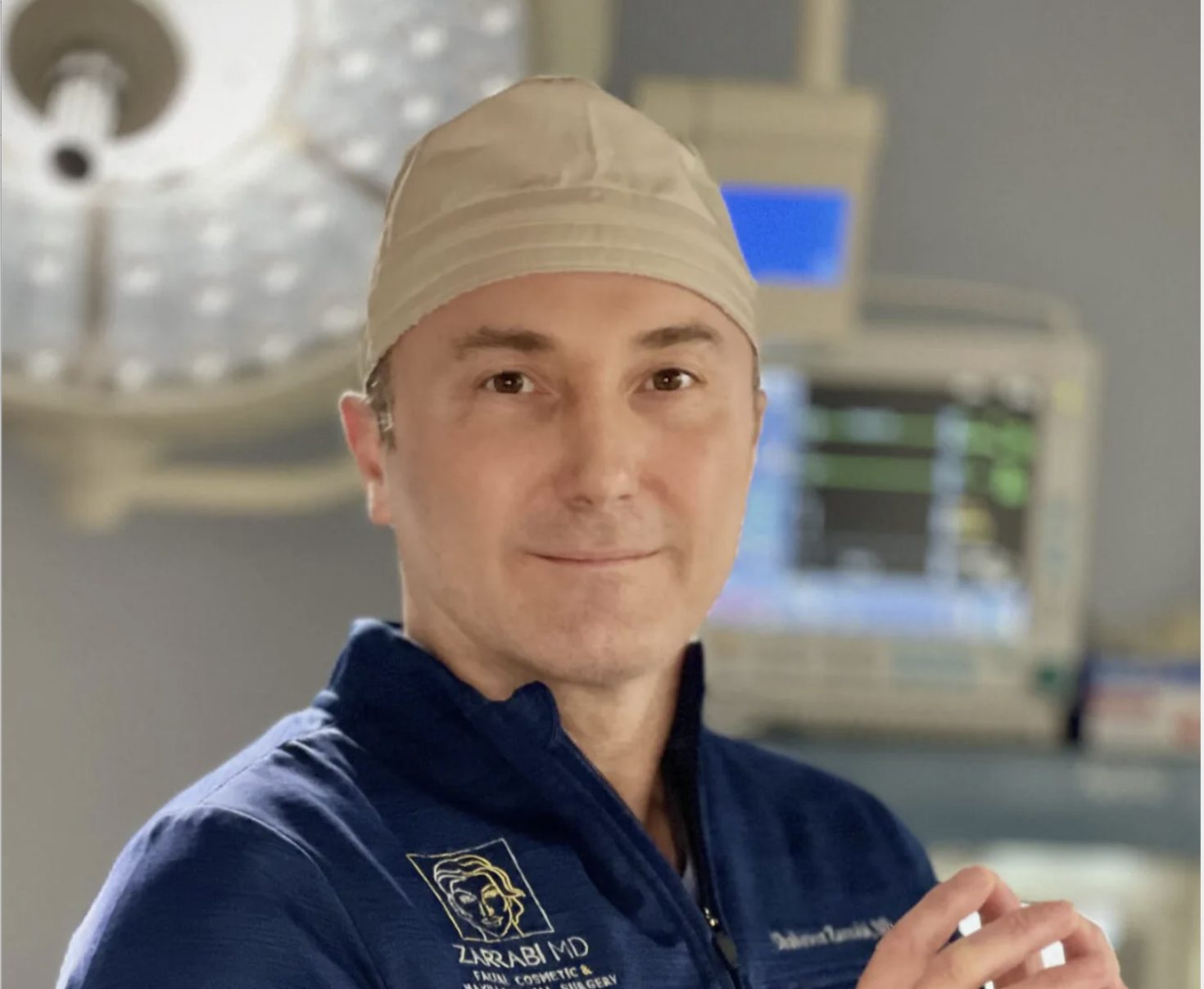
Dr. Zarrabi’s practice is a unique combination of art, science and cutting edge technology.
Dr. Zarrabi is a Board Certified Maxillofacial Surgeon and Diplomate of American Board of Oral and Maxillofacial Surgery. He is also an accomplished Sculptor Artist and he has created masterpieces for collections nationally and around the world.
Discover other insightful and engaging content from our blog

