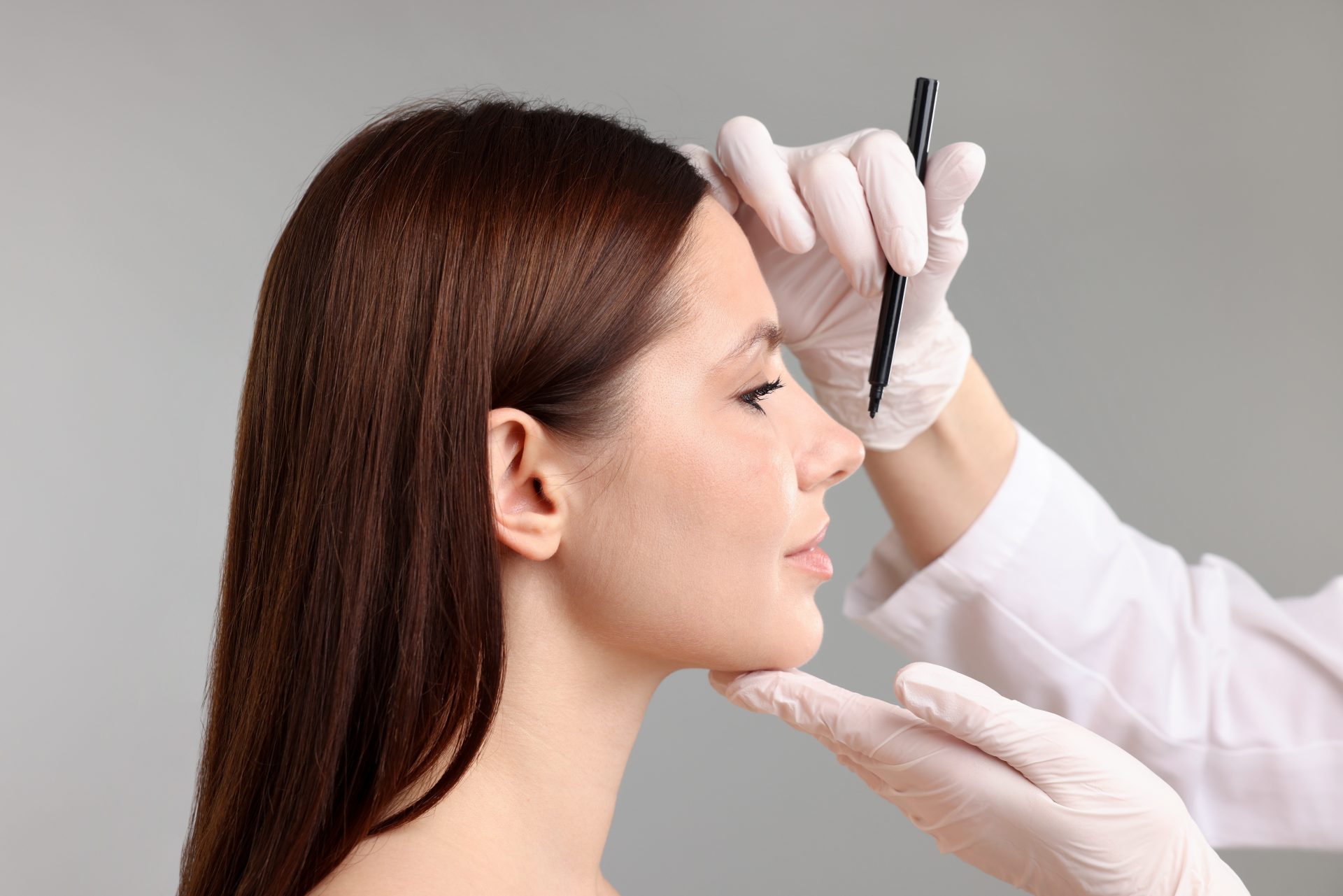
If you’ve ever worried that your nose won’t look “as defined” as the photos you’ve saved, or that surgery won’t give you a sharp tip because your skin is thick, you’re asking exactly the right question. The skin covering your nose changes how a surgeon plans the operation, how your nose heals, and how the final result looks.
Thin skin shows every detail of the underlying structure, so it requires a gentle, precise touch. Thick skin hides detail, so it needs a stronger internal framework and more patience during healing. Neither type is better. They simply call for different strategies, and a surgeon who plans around your skin can deliver a natural, balanced result with either one.
Most people think of rhinoplasty as reshaping bone and cartilage. That’s true, but those structures are covered by a “skin envelope” that has to settle over the new shape, like a sheet draped over furniture.
If the sheet is thin, you see every edge of what’s underneath. If it’s thick, the shape is softened. That’s why two people can have the same surgical changes and end up with different-looking noses.
Thin nasal skin sits close to the cartilage and bone. This is more common in people of European descent, though skin thickness varies from person to person.
Advantages of thin skin:
Refinements show up clearly, so subtle changes can look sharp and defined
Swelling usually settles faster
The nose can look more “chiseled” with less surgical effort
Challenges of thin skin:
Small irregularities, like a slight bump or uneven cartilage, can be visible
Over-reduction is a real risk, since there’s little tissue to hide mistakes
Results can show subtle changes over the years as tissues age
With thin skin, the goal is often careful reshaping and keeping enough support so the nose stays smooth and strong.
Thicker skin has more oil glands and a heavier layer of tissue between the surface and the cartilage. It’s common among people of Middle Eastern, African, Asian, and Hispanic backgrounds, though again, it depends on the individual.
If you have thick skin, you may notice that your nasal tip looks rounded or undefined, or that makeup and oil seem to collect around your nose. Many patients with this skin type also have what’s often called a bulbous tip. If that sounds familiar, our page on bulbous nose rhinoplasty covers it in more detail.
When skin is thick, simply trimming cartilage doesn’t work well. The skin can’t “shrink-wrap” around a smaller framework, so the nose may end up looking puffy or shapeless.
Instead, the surgeon builds structure. Think of a tent: without sturdy poles, the fabric sags. Cartilage grafts act as those poles, holding the tip and bridge in a shape that’s strong enough to show through thicker skin.
Thicker skin holds onto fluid longer. Most visible swelling goes down within a couple of weeks, but subtle changes can continue for a year or more. This doesn’t mean something is wrong. It’s simply how thick skin heals, and knowing that ahead of time saves a lot of worry.
You can read more about our approach to this on our thick skin rhinoplasty page.
You can get a rough idea at home. Look at your nose in natural light. Can you see the outline of cartilage at the tip? Does the skin around the nostrils look shiny, oily, or prone to breakouts? Those are more common with thick skin.
But a home check isn’t a diagnosis. In the office, skin thickness is assessed by feel, by pinching the skin and testing how much it moves over the cartilage, along with a careful look at your overall nasal structure. Many nasal features also overlap with your heritage, which is why we tailor plans to each patient’s background, including rhinoplasty for Middle Eastern, African American, and Asian patients.
We also use in-office 3D imaging to see the structure beneath the skin. It helps us plan grafts and understand exactly what we’re working with before the day of surgery.
Detail: Thin skin shows fine detail. Thick skin softens it.
Surgical approach: Thin skin often requires refinement and preservation. Thick skin often involves building and strengthening.
Swelling: Thin skin settles sooner. Thick skin can take a year or longer to fully refine.
Risk to watch: Thin skin shows imperfections. Thick skin can look heavy or undefined if the framework isn’t strong enough.
Longevity: Thick skin tends to hold its final shape steadily once healed.
How the surgeon reaches and shapes the framework is just as important as what’s being changed. In our practice, we use piezo ultrasonic rhinoplasty, which employs ultrasonic vibrations to shape bone and cartilage with great precision while minimizing trauma to the surrounding soft tissues. For many patients, this means less bruising and a smoother recovery.
We offer both open and closed approaches. Thick-skinned noses often benefit from the open approach because it gives clear access to place grafts exactly where they’re needed. Some patients are good candidates for closed surgery with no external incision, and that decision depends on your anatomy and goals.
If your tip is the main concern, tip rhinoplasty may also be part of the plan.
Recovery looks similar for both skin types in the first couple of weeks:
Swelling and some bruising are normal early on
A splint stays on for about a week
Most people return to work or school within about two weeks
Avoid blowing your nose for the period your surgeon advises
The difference shows up later. With thin skin, the nose usually looks refined sooner. With thick skin, the early weeks can feel like a waiting game, and the tip may look rounder before it gradually sharpens.
Simple habits help: stay well hydrated, avoid alcohol and smoking, and follow your aftercare instructions closely. Patients with thick skin sometimes feel discouraged at the three-month mark. That’s usually normal, not a sign that the result is off track.
This is the part many patients want to skip, but it’s the most important. Thick skin limits how dramatic a change can be. A very narrow, sharply sculpted tip may not be realistic. What is realistic is a more refined, better-proportioned nose that suits your face and looks natural.
“The happiest patients I see aren’t the ones who bring me a photo of someone else’s nose. They’re the ones who understand their own anatomy and what it can do. When we plan around the skin you actually have, results feel like you, only more balanced.” – Dr. Shahrouz Zarrabi
Our rhinoplasty gallery shows before-and-after photos so you can see what’s possible for different noses and skin types.
Cost depends on complexity, required techniques, and anesthesia and facility fees. For thick skin rhinoplasty in California, the range is roughly $10,500 to $20,000, and we give you an exact quote after your consultation. If you’d like to spread out payments, we offer financing options.
When you’re comparing surgeons, ask about their experience with your specific skin type. Look at before-and-after photos of patients with similar anatomy. Ask how they plan for swelling and long-term healing. A good surgeon should be comfortable explaining the trade-offs, not just promising perfection.
Dr. Zarrabi is a board-certified maxillofacial surgeon, and rhinoplasty is the heart of his work. You can learn more about his background on the Meet Dr. Zarrabi page. If breathing is also a concern, we can address it in the same operation through functional rhinoplasty or septorhinoplasty.
Your skin doesn’t have to stand in the way of the nose you want. It just needs to be part of the plan from the start. If you’re in Orange County or traveling in for surgery, we’d love to meet you, look at your anatomy together, and give you an honest picture of what’s possible.
Call us at 949-873-0807 or request a consultation to get started.
Disclaimer: This article is for general educational purposes only and is not medical advice. Every patient’s anatomy, health history, and goals are different, and results vary. Rhinoplasty carries risks, including bleeding, infection, anesthesia complications, and the possibility of revision surgery. Only a licensed surgeon who has examined you in person can recommend a treatment plan. Please consult a qualified provider before making any medical decisions.
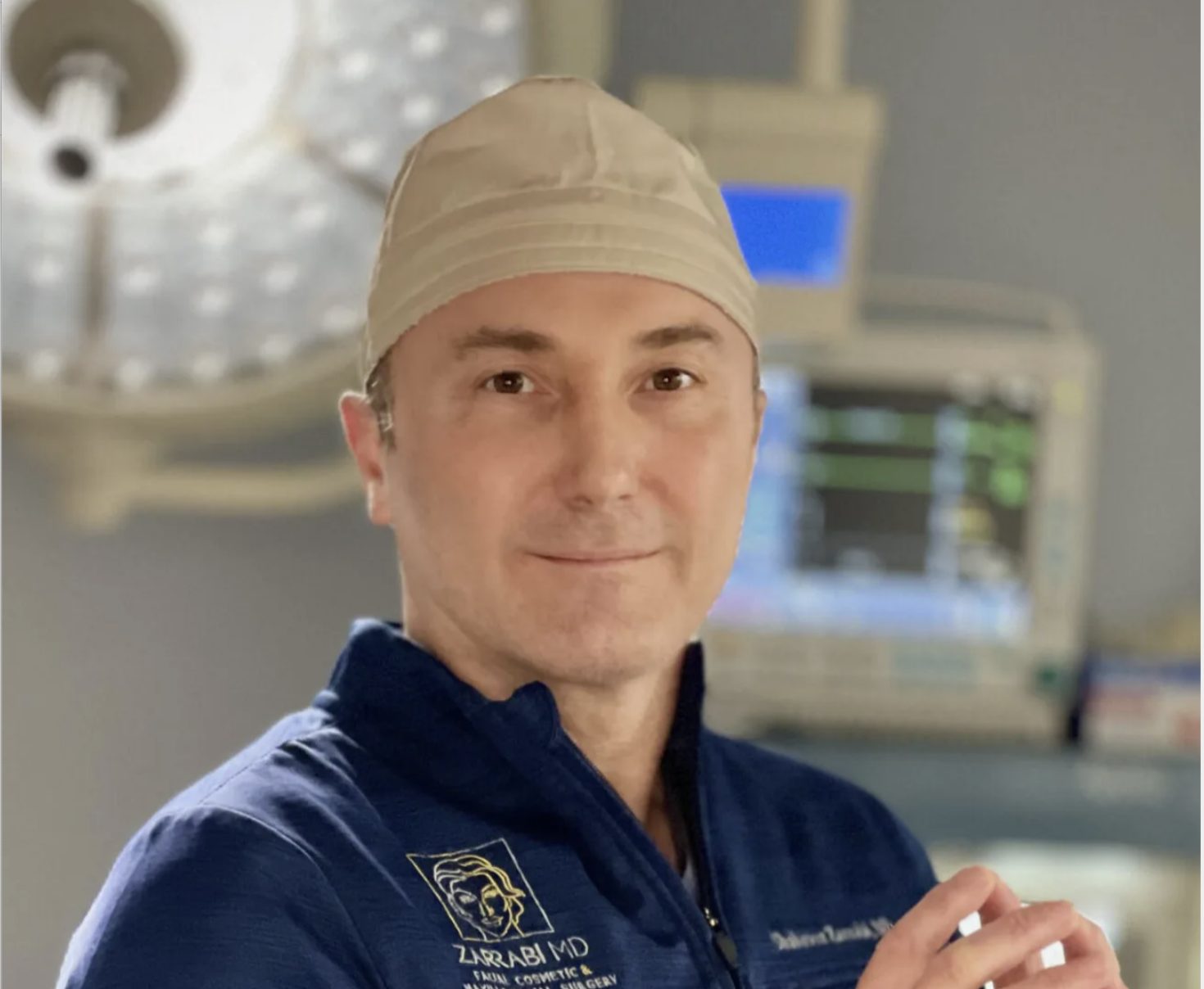
Dr. Zarrabi’s practice is a unique combination of art, science and cutting edge technology.
Dr. Zarrabi is a Board Certified Maxillofacial Surgeon and Diplomate of American Board of Oral and Maxillofacial Surgery. He is also an accomplished Sculptor Artist and he has created masterpieces for collections nationally and around the world.
Discover other insightful and engaging content from our blog