
Most patients can rest glasses directly on the bridge of the nose about six weeks after rhinoplasty, and some are asked to wait closer to three months, depending on how much work was done to the nasal bones. Until then, frames need to be supported so their weight never presses on the healing bridge.
Below, we break down what happens week by week, why the timing matters, and the workarounds that keep you seeing clearly while your results settle.
Glasses concentrate weight onto two small nose pads sitting right over the area that was just reshaped. Skin in that zone is numb for weeks, so you often will not feel pressure building. That is exactly why timing rules exist: your nose cannot warn you.
Permanent dents or grooves. Glasses can leave a permanent dent, groove, or asymmetry along the sides of the bridge
Shifting. Glasses can push newly set nasal bones slightly off-center before they have fully fused
Compromised healing. Glasses can restrict blood flow to skin and tissue, prolonging swelling and bruising in the upper third of the nose
Skin irritation. Glasses can aggravate skin while it is still fragile and taped
Rhinoplasty is a millimeter procedure. Every case Dr. Zarrabi performs is planned with in-office 3D imaging to achieve a specific, balanced result measured in fractions of an inch. Steady downward force during the healing window can blunt those refinements.
Because final shape reveals itself over many months, a small early shift may not be obvious until much later – long after it could have been prevented with a piece of tape.
Every recovery is individual, and Dr. Zarrabi gives each patient personalized instructions at post-op visits. Here is the general pattern most rhinoplasty patients follow.
After your rhinoplasty surgery, an external cast or splint protects the nose for roughly the first week and must stay on until the date your surgeon specifies. Many patients are surprised to learn the cast itself can carry lightweight glasses – but only with your surgeon’s approval, because the cast transmits pressure to the bone underneath.
Once the cast comes off, the bridge is unprotected, and swelling is at its peak. No glasses should rest on the nose during this phase. This is also when attending every post-op appointment matters most; missed visits can affect the final outcome.
Swelling begins to drop, and bruising fades, but the bones are still stabilizing, and the structure remains malleable.
Glasses must be taped to the forehead or supported on the cheeks
Reading glasses and sunglasses count too – light frames still create a pressure point
Contact lenses remain the easiest option during this stretch
Around the six-week mark is the first milestone where glasses may be considered – but it is not an automatic green light. Dr. Zarrabi will examine your nose at a post-op appointment, checking for tenderness and confirming the bones have fused enough to support light frames.
Start with the lightest frames you own, worn for short stretches, then increase gradually
Check for red marks or indentations each time you remove them
Heavier frames – thick acetate, oversized sunglasses, sports goggles – usually wait until closer to three months
Extensive bone work, a dorsal hump reduction, or osteotomies to narrow the bridge lead to the longer end of this range
By three months, the nasal bones are far more resilient, and most patients wear glasses normally. Residual swelling in the tip and bridge can continue to resolve for a year or more, especially for patients with thicker skin.
Your nose is durable by this stage – but if a frame leaves a lasting indentation or feels sore, switch to a lighter pair.
You do not have to squint through recovery. Several comfortable, practical options let you see clearly while protecting your result.
If you need frames during the restricted window, the goal is simple: transfer the weight off the bridge.
Forehead taping. Run a strip of hypoallergenic paper tape from the bridge of the frame up to your forehead so the glasses hang rather than rest
Cheek supports. Small foam or moleskin pads adhered to your cheeks can carry the frame’s weight, keeping the nose pads hovering just above the skin
Glasses “crutches.” Wire or plastic supports designed to clip onto frames and rest on the cheeks are widely available and reusable
Choose the lightest frame you own. Rimless or thin titanium frames put a fraction of the load of heavy plastic or metal frames
Check your setup in a mirror daily. If the nose pads are touching, adjust.
Contact lenses. Usually the simplest solution once your surgeon clears you to touch your face comfortably; many patients resume within the first week or two. Get fitted and stock up before your surgery date
Prescription swim-style or strap-mounted lenses. Not stylish, but they keep weight off the bridge entirely
Larger screen text. Bump up font sizes on your phone and computer so you can skip readers for short tasks
Wide-brimmed hats. Prescription sunglasses follow the same rules as regular glasses, so a hat is the better sun shield early on – and less sun means less scarring and hyperpigmentation
Sleep with your head elevated for the first couple of weeks to reduce swelling around the bridge
Keep sun exposure off the healing skin – a wide-brim hat works better than sunglasses in the early weeks
Avoid pulling clothing over your head in a way that snags the nose
Bring your everyday frames to a post-op visit so Dr. Zarrabi can see exactly what you plan to wear
Be patient and listen to your body – waiting a few extra weeks is a small price for a lifelong result
A good rhinoplasty result depends just as much on careful healing as it does on the surgery itself. While most patients can begin wearing lightweight glasses around six weeks after surgery, others may need to wait up to three months, depending on their procedure and recovery. Following your surgeon’s instructions, using temporary alternatives when needed, and avoiding pressure on the healing bridge will help protect your new nose and ensure the best possible long-term outcome.
To discuss your goals in person with Dr. Zarrabi, request a consultation.
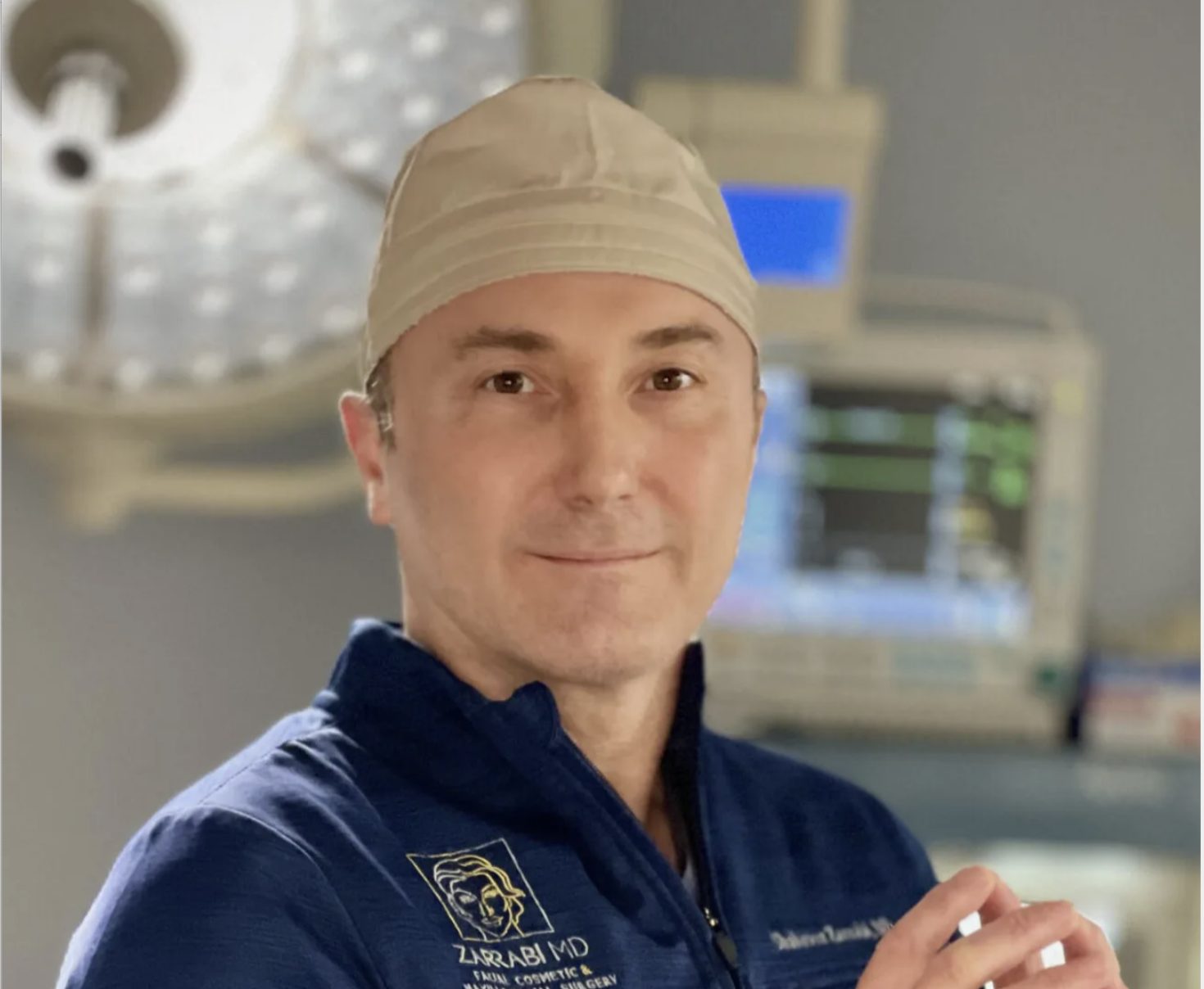
Dr. Zarrabi’s practice is a unique combination of art, science and cutting edge technology.
Dr. Zarrabi is a Board Certified Maxillofacial Surgeon and Diplomate of American Board of Oral and Maxillofacial Surgery. He is also an accomplished Sculptor Artist and he has created masterpieces for collections nationally and around the world.
Discover other insightful and engaging content from our blog