Knowing what to look for in before-and-after photos is essential for setting realistic expectations and understanding the possibilities of rhinoplasty for a bulbous tip. The most important elements to assess are the refinement and definition of the nasal tip, ensuring it appears sculpted and contoured rather than simply smaller. A successful result shows a tip that is symmetrical, in proportion with the nasal bridge and the rest of the face, and maintains a natural, un-operated appearance from every angle.
These photos serve as a visual testament to a surgeon’s aesthetic judgment and technical skill, especially in complex cases involving thick skin or unique cartilage structures.
A bulbous nose is characterized by a nasal tip that appears rounded, wide, and poorly defined. Instead of having distinct, delicate angles that catch the light, the tip looks full, circular, or like a ball at the end of the nose. This appearance is not due to a single cause but rather a combination of anatomical factors. The three primary contributors are:
Cartilage Shape and Size: The lower lateral cartilages are the structures that form the framework of your nasal tip. In a bulbous nose, these cartilages are often overly large, convex (outwardly curved), or both. Their rounded shape creates a full, dome-like appearance instead of a more defined, triangular tip.
Cartilage Position: The spacing and angle of the lower lateral cartilages also play a significant role. If the cartilages are positioned far apart, the tip will look wide and “boxy.” If they are angled in a way that lacks upward rotation or projection, the tip can appear heavy and droopy in addition to being bulbous.
Thick Skin: The thickness of the skin and underlying soft tissue envelope covering the nasal tip is a major factor. Even if the cartilage framework is perfectly sculpted, thick skin can obscure that definition, much like a thick blanket hiding the shape of the furniture beneath it. This is a common characteristic in many patients, particularly those of certain ethnic backgrounds, and requires specialized surgical techniques.
While “bulbous” is the general term, the appearance can be further broken down into two main types:
The Rounded Tip: This is the classic “ball-like” nose. It lacks any discernible points or angles and appears uniformly round from the front and side views. The underlying cause is typically large, dome-like cartilages combined with average to thick skin.
The Boxy Tip: This variation appears wide and flat across the top, with poorly defined corners, giving it a square or trapezoidal shape when viewed from the front or below. A boxy tip is often caused by lower lateral cartilages that are broad, flat, and widely separated.
Understanding whether your tip is more rounded or boxy helps you look for specific changes in before-and-after photos. For a rounded tip, you want to see the creation of subtle definition. For a boxy tip, you want to see the tip narrowed and brought into a more refined, triangular shape.
A surgeon’s before-and-after gallery is their portfolio. To analyze it like a professional, you need to know what to look for beyond a simple glance. High-quality, consistent photography is the first sign of a transparent and professional practice.
The most critical factor for an honest comparison is consistency. The “before” and “after” photos should be taken with the exact same lighting, background, camera angle, and distance.
Lighting: Harsh shadows can hide imperfections, while flat lighting can wash out definition. The lighting should be soft and even in both photos to accurately reveal the nasal contours. Be wary of galleries where the “after” photos are brighter or use different lighting that might artificially enhance the result.
Angles: The patient’s head should be in the identical position in both shots. A slight tilt up or down can dramatically change the appearance of the tip and bridge. Professional galleries will feature a standardized set of views (front, profile, three-quarter, and base).
Since your primary concern is the bulbous tip, zoom in on this area. A good gallery will include high-resolution images that allow for close inspection. You should be able to see the fine details of the tip’s new shape. Does it have subtle facets and light-reflecting points where there was once only a round shadow? Is the transition from the tip to the nostril rim smooth and natural? Close-up views are where the true artistry and precision of the surgeon’s work are revealed.
A nose is a three-dimensional structure, and it must be evaluated from all angles.
Front View: This is where you assess symmetry and width. Look for a tip that is narrower and more defined. The two tip-defining points should be visible and symmetric. The overall shape should appear more triangular and less bottom-heavy.
Side (Profile) View: This view shows tip projection (how far it sticks out from the face) and rotation (its upward or downward angle). For a bulbous nose, you want to see a tip that is well-supported and has adequate projection, not one that looks weak or droopy. The profile line should flow smoothly from the bridge to the tip.
Base View (Worm’s-Eye View): This is perhaps the most revealing angle for assessing bulbous tip refinement. In the “before” shot, the base may look round or square. In the “after” shot, you should see a more triangular shape, formed by the two nostrils and the nasal lobule (the fleshy part of the tip). The nostrils should appear symmetric and oval-shaped, not round or flared.
Swelling can take a year or even longer to fully resolve, especially in the nasal tip and in patients with thick skin. It’s important to know when the “after” photo was taken.
Early Results (e.g., 3-6 months): The nose will still have residual swelling, which can make the tip look more rounded than it will ultimately be. You should still see a significant improvement, but the final definition is yet to come.
Long-Term Results (1 year or more): These photos show the final, settled outcome. This is the true result of the surgery. A surgeon who showcases long-term results demonstrates confidence in the stability and longevity of their work. For bulbous and thick-skinned noses, seeing results at the 12- or 18-month mark is particularly valuable.
Once you’ve confirmed the photos are high-quality and consistent, you can dive into assessing the aesthetic outcome itself.
This is the primary goal of the surgery. A bulbous tip lacks definition. A successful result creates it. Instead of a single, round dome, look for a tip that has multiple, subtle planes and points that reflect light. You should be able to discern two distinct tip-defining points at the top of the tip, which creates a more sophisticated and less amorphous look. The key is subtlety; the result should appear naturally defined, not artificially sharpened.
Techniques like Ultrasonic Rhinoplasty, which uses high-frequency vibrations to precisely sculpt nasal bones, can contribute to an overall refined result with less trauma to surrounding tissues.
A beautiful nose is a symmetric and proportional one.
Symmetry: From the front view, the tip should be perfectly centered. The left and right sides of the tip should be mirror images of each other. From the base view, the nostrils should be of similar size and shape. The columella (the strip of skin between the nostrils) should be straight and not hanging too low (hanging columella) or pulled up too high (retracted columella).
Proportion: The new tip must fit the rest of the nose and face. A tiny tip on a strong, wide bridge will look out of place. A refined tip must be balanced by a bridge of appropriate width and height. The overall size of the nose should be in harmony with the patient’s eyes, cheeks, and chin. This is why a full facial assessment is a critical part of the consultation process with Dr. Zarrabi.
The ultimate sign of a successful rhinoplasty is that it doesn’t look like a rhinoplasty. The nose should look like the one the patient was always meant to have. Avoid results that look “done” or “surgical.” Telltale signs of an unnatural result include a pinched tip, collapsed nostrils, or a “ski-slope” profile. The goal is refinement, not eradication of character.
This is especially important in ethnic rhinoplasty, where the objective is to refine features while preserving the patient’s unique ethnic identity. A surgeon skilled in ethnic rhinoplasty knows how to create definition that complements, rather than erases, a patient’s heritage.
While not visually assessable in photos, knowing that a surgeon prioritizes function is key. A nose that has been narrowed or refined without proper structural support can lead to nasal valve collapse and breathing problems down the line. A surgeon who talks about using cartilage grafts to support the tip and airways is building a nose that is not only beautiful but also strong and functional for life. This is a crucial topic to bring up during your in-person consultation.
Rhinoplasty is not a one-size-fits-all procedure. A surgeon must tailor their approach to the patient’s gender, ethnicity, skin type, and unique aesthetic goals. This is why it’s beneficial to look for examples in a surgeon’s gallery that resemble your own features.
The aesthetic goals for male and female rhinoplasty are typically different, and this should be reflected in the before-and-after photos.
Male Rhinoplasty: Generally, the goal is to create a strong, defined, and straight nose. The bridge should remain prominent, and the tip should be well-defined but not overly rotated or delicate. A slightly under-rotated or 90-degree angle between the lip and the columella is often considered ideal. When looking at male rhinoplasty photos, look for a result that reduces the bulbousness while maintaining a distinctly masculine character.
Female Rhinoplasty: For female patients, a softer result is often desired. The bridge may have a subtle curve, and the tip is often slightly more rotated (up-turned) than in a male. The definition should be elegant and refined, but not sharp. Look for results that create a more delicate and feminine profile without looking artificial.
This is one of the most important considerations when evaluating a surgeon’s work. Different ethnicities have different nasal characteristics, particularly regarding skin thickness and cartilage strength. A surgeon must have a deep understanding of these variations to produce natural-looking results.
Thick Skin (Common in African American, Hispanic, and some Asian and Middle Eastern patients): As discussed, thick skin can hide underlying surgical work. Look for surgeons who show consistent, noticeable improvements in these cases. The refinement may be softer, but it should still be a clear and positive change from a rounded shape to a more contoured one.
Weak Cartilage (Common in some Asian and African American patients): Weak cartilage may not be able to support the tip after refinement, leading to a collapsed or flat appearance. In these photos, you are looking for a result where the surgeon not only refined the tip but also used grafting techniques to build up the structure, adding definition and support.
Preserving Ethnic Identity: The goal of ethnic rhinoplasty is to refine the nose in a way that harmonizes with the patient’s other facial features while respecting their ethnic heritage. Look for results that don’t westernize the face, but rather create the version of the patient’s own nose. Dr. Zarrabi’s extensive experience performing Persian, Middle Eastern, Hispanic, and other ethnic rhinoplasties is a cornerstone of his practice.
Before-and-after photos show what is possible for other patients. What is possible for you depends entirely on your unique anatomy. This is where advanced technology becomes indispensable. Our practice utilizes in-office 3D imaging and CT scans to create a detailed model of your nasal structure.
During your consultation, Dr. Zarrabi can use this 3D simulation to show you a realistic preview of your potential surgical outcome. This tool allows you to:
See your nose from all angles.
Visualize the proposed changes to the tip, bridge, and nostrils.
Communicate your aesthetic goals more effectively.
This process helps align your expectations with what is surgically achievable, forming the foundation for a successful and satisfying result.
Evaluating before-and-after photos is a fundamental step in refining a bulbous nose. By focusing on tip definition, symmetry, naturalness, and proportionality across multiple, consistent camera angles, you can gain a clear sense of a surgeon’s skill. Remember to consider special factors like skin thickness, gender, and ethnicity, and look for a portfolio that demonstrates expertise with cases similar to your own.
Ultimately, these photos are a starting point for a deeper conversation, one that is had during an in-person consultation where advanced tools like 3D imaging can be used to create a personalized surgical plan tailored to your unique anatomy and aesthetic goals.
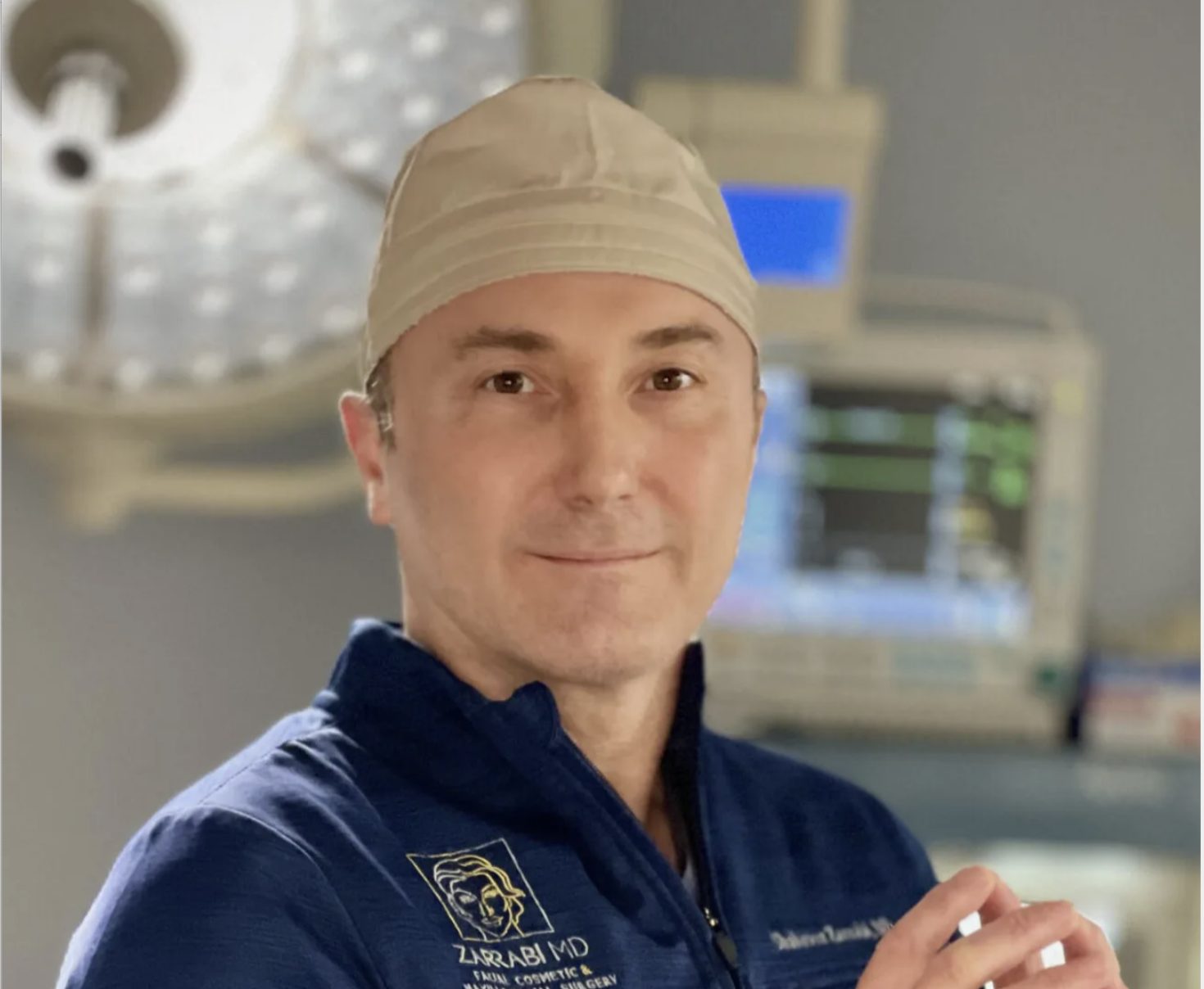
Dr. Zarrabi’s practice is a unique combination of art, science and cutting edge technology.
Dr. Zarrabi is a Board Certified Maxillofacial Surgeon and Diplomate of American Board of Oral and Maxillofacial Surgery. He is also an accomplished Sculptor Artist and he has created masterpieces for collections nationally and around the world.
Discover other insightful and engaging content from our blog